Medellín, Colombia — the City of Eternal Spring — is your base for climbing El Peñol in Guatapé, touring the Eje Cafetero coffee region, and exploring the heritage towns and rivers of Antioquia. This guide covers it all, in English.
Explore the ToursRight now in Medellín and the main tour towns — Santa Fe runs hot, Jardín runs cool.
Live data from Open-Meteo, refreshed each time this page loads.
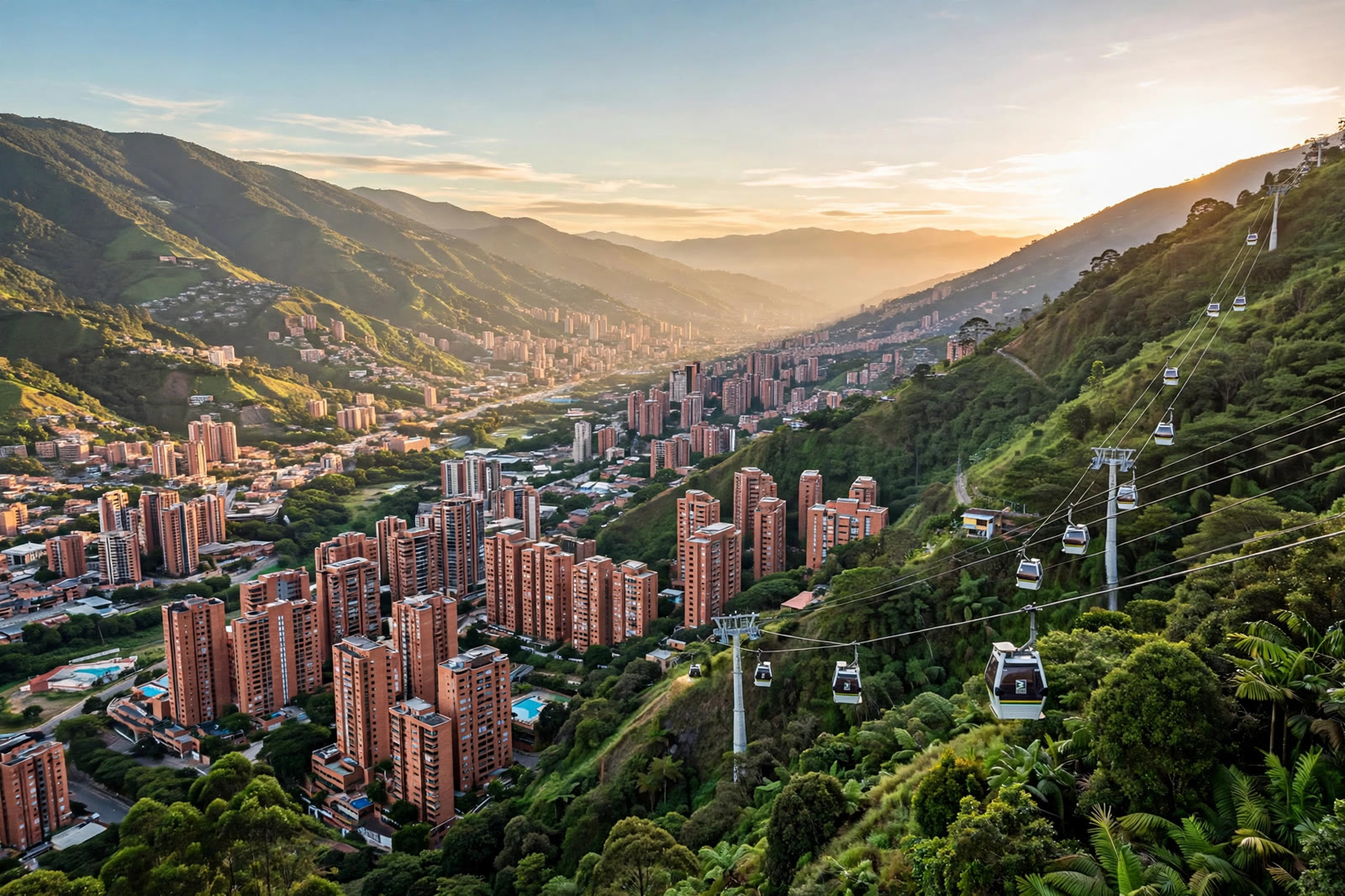
Medellín is the capital of Colombia's Antioquia department, a city of about 2.5 million people set in the narrow Aburrá Valley at roughly 1,500 metres (4,900 ft) above sea level. Its mild, spring-like weather, modern Metro and Metrocable system, and easy access to mountains, lakes and coffee country make it the natural starting point for travel in northwest Colombia.
The essentials inside the city, most of them reachable on the Metro and Metrocable.
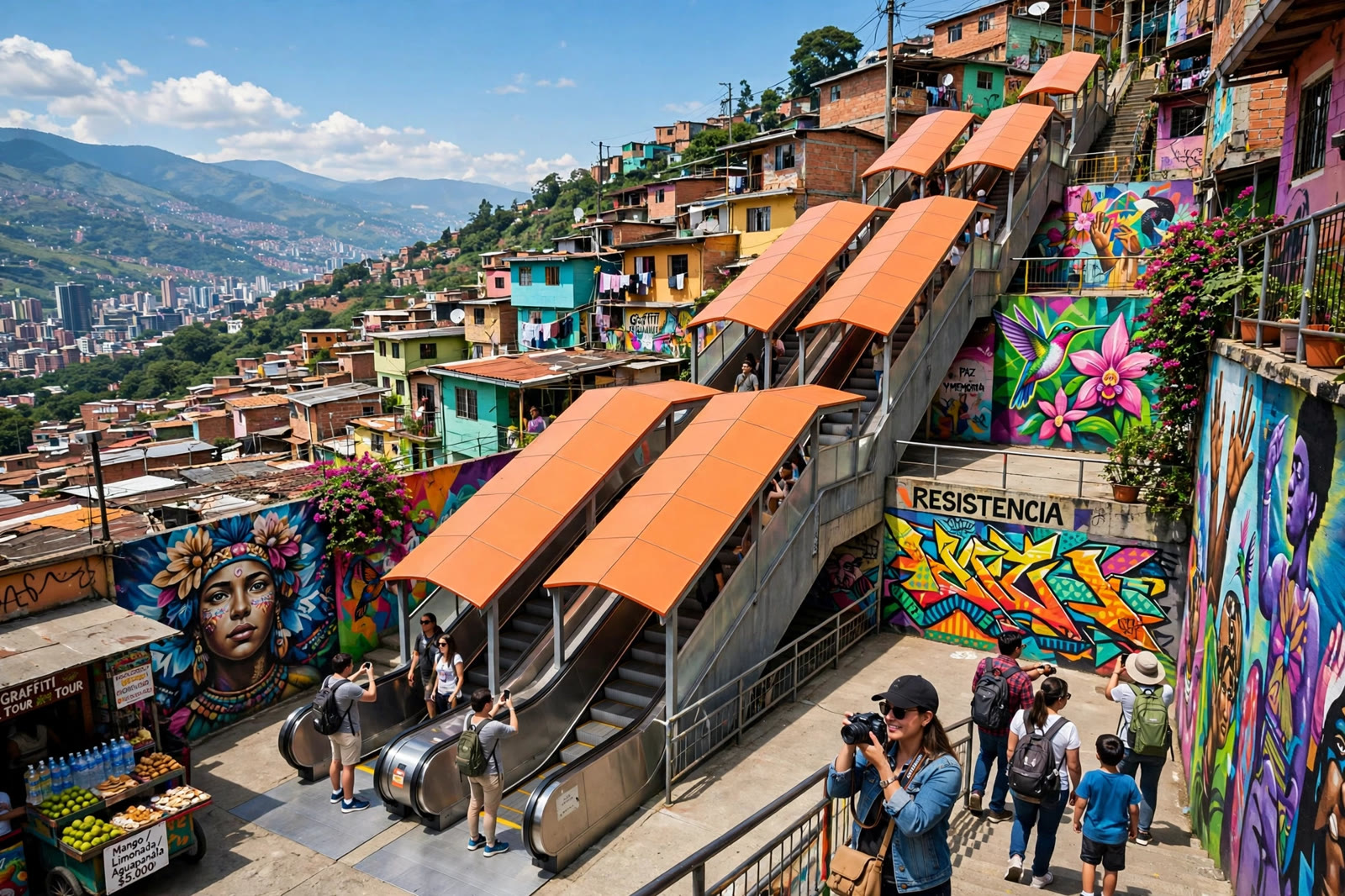
Once off-limits, Comuna 13 is now Medellín's most visited neighbourhood: a hillside district of huge graffiti murals, hip-hop and breakdance, reached by the famous outdoor escalators installed in 2011. Go with a local guide to hear the story of its transformation.
In the city centre, Plaza Botero displays 23 bronze sculptures by Fernando Botero, Colombia's most famous artist, in front of the Museo de Antioquia — the essential introduction to the region's art and history.
Ride the Metrocable gondolas up from Santo Domingo over the hillside comunas to Parque Arví, a nature reserve of forest trails, picnic spots and farmers' markets — the city's green escape, reached entirely by cable car.
El Poblado and its Provenza district are the dining and nightlife heart of the city; Laureles, across the river, is the leafy, local alternative with cafés along Avenida Nutibara and the stadium area. Both are the main bases for visitors.
Parque Explora is a hands-on science museum with one of South America's largest aquariums; next door, the Jardín Botánico offers 14 hectares of gardens, an orchid collection and giant iguanas roaming the lawns. Entry to the garden is free.
Pueblito Paisa, on Cerro Nutibara in the middle of the valley, is a replica of a traditional Antioquian village with the city's best sunset views. Cerro El Volador, the valley's largest hill park, is the local favourite for morning hikes.
The trips visitors book most: day tours east to Guatapé, heritage towns across Antioquia, and multi-day journeys into the coffee region. All of them start in Medellín.
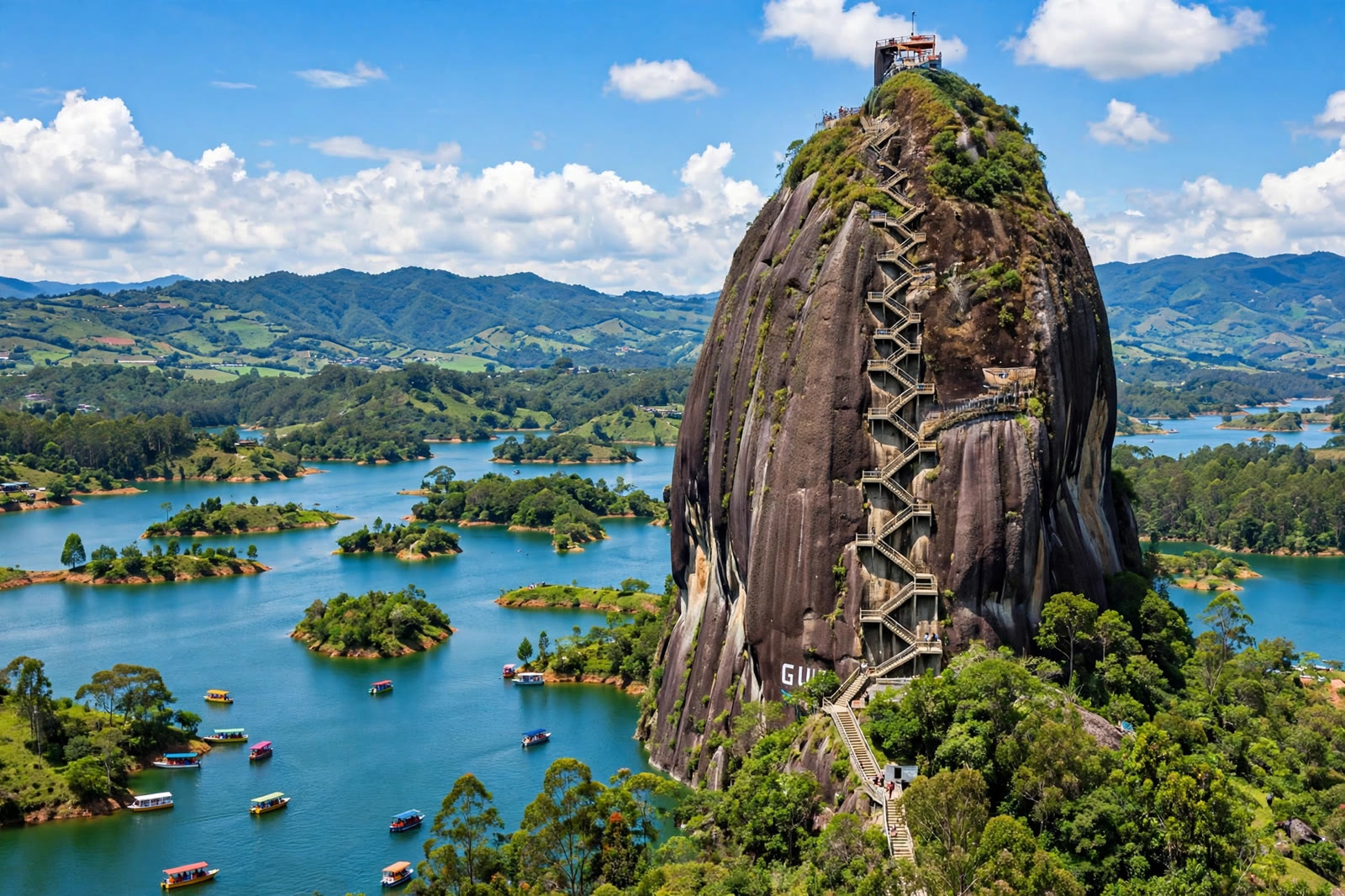
Colombia's most popular day trip. Climb the 740 steps of El Peñol, a 220-metre granite monolith, for the classic view over the Peñol-Guatapé reservoir, then take a boat ride among its islands and wander Guatapé itself — quite possibly Colombia's most colourful town, where every house wears a painted zócalo (bas-relief) panel.
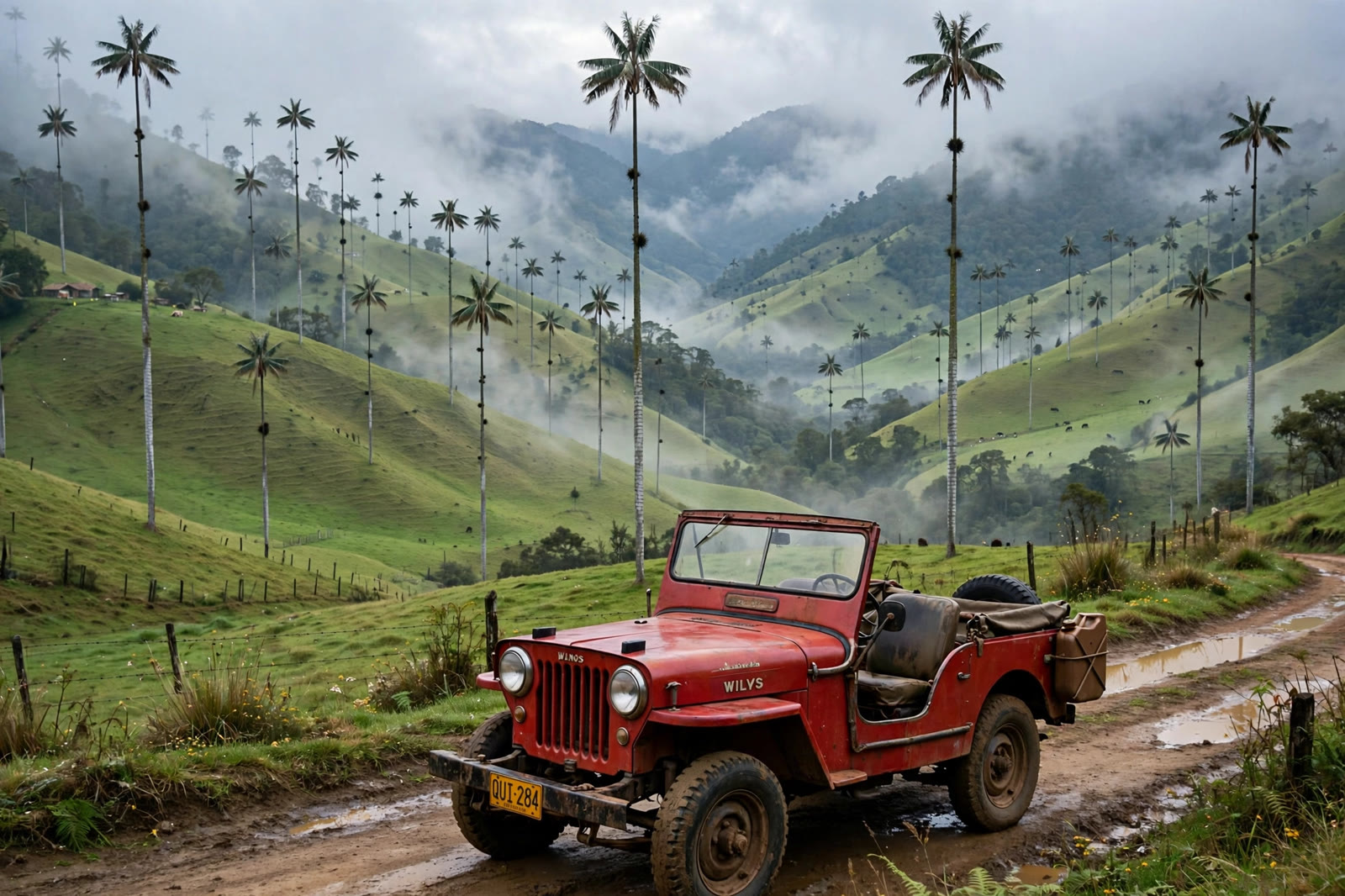
The Eje Cafetero is Colombia's coffee axis — a UNESCO-listed Coffee Cultural Landscape of green ridges, bamboo forests and family fincas. From Medellín it is a flight of about 1 hour to Pereira or Armenia. Base yourself in Salento, hike among the world's tallest palm trees in the Cocora Valley, and pick, roast and taste coffee where it grows.
A guided walk through Comuna 13's murals, escalators and viewpoints with a local guide who explains the neighbourhood's history and revival — with hip-hop performances, galleries and street food along the way.
The full introduction in one day: the historic centre and Plaza Botero, the Museo de Antioquia, a Metro and Metrocable ride, Pueblito Paisa for the view, and the memorial museum Casa de la Memoria for the city's recent history.
You don't have to leave Antioquia to see coffee country. Family farms in the hills around the city — toward Santa Elena, the southwest and the eastern highlands — run bean-to-cup tours: walk the plantation, pick ripe cherries in season, and learn the washed process Colombia is famous for.
Float over the comunas by Metrocable to Parque Arví's forests and markets, then continue to Santa Elena, the flower-farming village whose silleteros carry huge flower arrangements on their backs at the August Flower Festival.
Beyond the city, Antioquia is a department of colonial towns, coffee villages, rivers and lakes. These are the places visitors combine with Medellín, with typical road times from the city.
The reservoir town and its giant rock are Antioquia's postcard image. Beyond the climb, Guatapé offers boat tours, kayaking, waterfront restaurants and the most photographed streets in the region — every building decorated with colourful zócalos.
Founded in 1541 and the former capital of Antioquia, Santa Fe is a perfectly preserved colonial town of whitewashed churches, cobblestone streets and tamarind sweets — plus the Puente de Occidente, the 1895 suspension bridge over the Cauca River that was once among the longest in the Americas. It is hot and sunny year-round.
Antioquia's prettiest coffee town: a main square of painted tables and chairs, a neo-Gothic basilica, cable cars (La Garrucha) over the valley, trout farms, waterfalls and the Cueva del Esplendor, a waterfall inside a cave reached on a guided hike.
A heritage town of colourful balconies, leather workshops (home of the carriél bag) and religious history — the birthplace of Saint Laura Montoya, Colombia's first saint. Ride up to Cerro El Salvador for the view over the coffee mountains.
The Cañón del Río Claro nature reserve protects a river that has carved a canyon through marble. Swim in turquoise pools, raft gentle rapids, zipline over the canyon and walk to the Cueva de los Guácharos, a cave of oilbirds. Best as a full day or overnight.
In the lakes district beyond Guatapé, these towns are Antioquia's waterfall country: natural swimming pools, cascades such as La Cristalina, and quiet countryside stays. A favourite with Colombians and still little-known to international visitors.
Near Doradal, Pablo Escobar's former estate is now the Parque Temático Hacienda Nápoles, a large safari and water park with zoo animals, museums and pools. Whatever your view of its history, the transformation — from cartel ranch to family theme park — is a story Colombia tells about itself.
Rionegro, La Ceja, El Retiro and Guarne, in the green highlands where the airport sits, are the weekend escape of Medellín families: flower farms, lakeside restaurants, horse riding and cool mountain air — an easy half-day from the city.
Ciudad Bolívar, Hispania, Andes and Salgar form Antioquia's own coffee belt, a working landscape of fincas, panela mills and mountain roads — the authentic, less-visited counterpart to the Eje Cafetero, best explored over two days with Jardín.
The Eje Cafetero (Coffee Axis) spans the departments of Caldas, Risaralda and Quindío, southwest of Antioquia. UNESCO inscribed its Coffee Cultural Landscape as a World Heritage site in 2011. From Medellín, most visitors fly about 1 hour to Pereira or Armenia, or make the scenic road trip of roughly 6 hours.
Salento is the region's gateway town — colourful balconies, trout lunches and the trailhead for the Cocora Valley, where Colombia's national tree, the Quindío wax palm, rises up to 60 metres over green pasture. Nearby Filandia is its quieter twin, famous for basket weaving and a panoramic mirador. In Manizales, look for the cathedral's panoramic corridor and the hot springs on the road to Los Nevados National Park.
The essential activity is a finca tour: walk a working coffee farm with the family that runs it, pick red cherries in harvest season (main harvest October–December, with a smaller mitaca around April–May), see the washing and drying, and finish with a cupping of the farm's own roast. Many fincas around Salento, Filandia and Pereira welcome visitors daily.
The practical basics for a first trip to Medellín and Antioquia.
Fly into José María Córdova International Airport (MDE) in Rionegro, with direct flights from Miami, Fort Lauderdale, New York, Panama City, Mexico City, Madrid and more. The airport is about 45 minutes from El Poblado via the Túnel de Oriente. Medellín's second airport, Olaya Herrera (EOH), sits in the city and serves domestic routes.
Medellín has Colombia's only Metro, integrated with Metrocable gondolas, a tram and Metroplús buses on one card. It is clean, safe and the fastest way across the valley. Taxis and ride-hailing apps cover the rest; for Guatapé and the towns, tours, buses from the Terminal del Norte, and private drivers are the standard options.
El Poblado / Provenza: the widest choice of hotels, restaurants and nightlife. Laureles: flatter, leafier and more local, popular for longer stays. Envigado: a traditional town absorbed into the metro area, known for its food scene. Outside the city, Guatapé and Jardín have charming boutique stays for overnights.
The climate barely changes: expect 22–24 °C days and cool evenings all year. Drier months are December–March and July–August; the Feria de las Flores in August is the city's biggest festival. Currency is the Colombian peso (COP); cards are widely accepted in tourist areas. Spanish is the local language — tours and hotels in the main areas operate comfortably in English.
Medellín has a mild spring-like climate all year, averaging 22–24 °C (72–75 °F). The driest months are December to March and July to August. The famous Feria de las Flores (Flower Festival) takes place in August.
Guatapé is about 79 km (49 miles) east of Medellín, roughly 2 hours by road. Yes — climbing El Peñol, a boat ride on the reservoir and the colourful town centre fit comfortably into a full-day trip from Medellín.
The fastest way is a flight of about 1 hour from Medellín to Pereira or Armenia. By road it is a scenic drive of around 6 hours. Most visitors spend 2 to 3 days visiting Salento, the Cocora Valley wax palms and a working coffee farm.
José María Córdova International Airport (MDE) is in Rionegro, about 45 minutes from El Poblado in Medellín via the Túnel de Oriente highway. Medellín also has a smaller city airport, Olaya Herrera (EOH), for domestic flights.
Allow at least 3 to 4 days: one day for the city (Comuna 13, Plaza Botero, Metrocable and Parque Arví), one for Guatapé, and one or two for Antioquia towns such as Santa Fe de Antioquia or Jardín. Add 2 to 3 more days for the Eje Cafetero coffee region.
The currency is the Colombian peso (COP). Cards are widely accepted in El Poblado and Laureles. English is spoken in most tour operations and hotels, but a few basic Spanish phrases go a long way outside the main tourist areas.